Good Day Bali Team
Travel writers and Bali locals sharing the island's best-kept secrets.
I have a confession: I almost didn't write this article. Not because I couldn't find ten amazing hidden spots — I could find fifty. But because there's something bittersweet about sharing places that still feel like secrets. Every time a "hidden gem" goes viral on Instagram, it seems to lose a little of its magic. So I'm going to ask you something: if you visit these places, tread lightly. Be respectful. And maybe don't geotag every single one.
Everyone knows Tanah Lot. Everyone has that Gates of Heaven photo. But Bali's real soul lives in the spaces between the postcards — villages where time moves differently, waterfalls you won't find without a local's guidance, and temples where the only sound is wind through frangipani trees. These ten places changed how I see Bali. I hope they do the same for you.
Sekumpul Waterfall: Where Seven Falls Become One Symphony
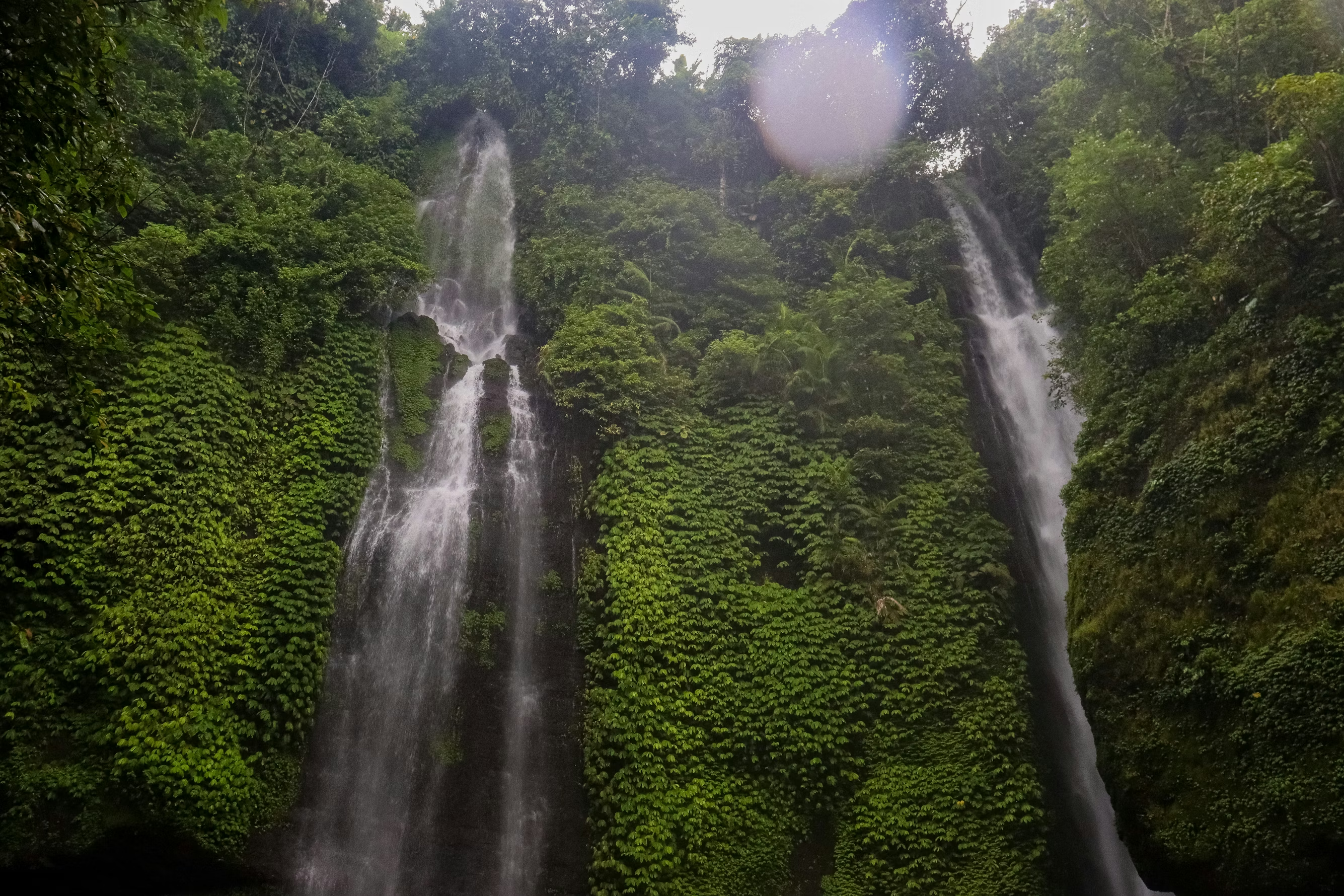
Forget Tegenungan and its tour bus parking lot. Sekumpul is what waterfalls are supposed to feel like. Located deep in the northern highlands near Singaraja, this isn't one waterfall — it's seven separate cascades tumbling down a cliff face covered in impossibly green vegetation. The trek itself is an adventure: rice terraces, bamboo bridges swaying over streams, steep stone steps that test your legs.
I arrived at 6:30 AM on a Tuesday, and for forty minutes, I had the entire place to myself. Standing at the base with water misting my face, surrounded by walls of green and the thunder of falling water, I understood why Balinese people consider waterfalls sacred. It feels like standing inside a cathedral built by nature itself. Go early. Bring a waterproof bag. And prepare to get completely soaked.
Sidemen Valley: The Bali Instagram Forgot
While Ubud chokes on tourist traffic, Sidemen Valley — just 45 minutes east — offers everything Ubud promises without the chaos. I'm talking emerald rice terraces that stretch to the horizon, artisans weaving ikat textiles on wooden looms in open-air workshops, and Mount Agung looming in the background like a sleeping giant.
I stayed in a family-run guesthouse here for three nights, paying roughly $25 per night for a room with a view that would cost $300 in Ubud. The family invited me to help make offerings one morning — I was terrible at it, but they laughed kindly and fed me the best sate I've ever tasted. Wake up to roosters instead of scooter traffic. Walk through paddies where farmers wave hello. This is the Bali people fell in love with decades ago, and somehow it's still here.
Pasir Putih: A Beach That Time Bypassed
The name literally means "White Sand," and it doesn't oversell. Hidden on Bali's eastern coast near Candidasa, Pasir Putih is a crescent of powdery white sand backed by limestone cliffs. No beach clubs. No beanbag bars playing house music. Just a couple of local warungs grilling freshly caught fish, water so clear you can see your toes, and the kind of silence that makes you realize how noisy your normal life is.
Getting there requires driving down a rough track that keeps the tour buses away. I went on a Sunday afternoon and shared the entire beach with maybe fifteen people. A local fisherman sold me grilled red snapper for the equivalent of $4, and I ate it sitting on the sand with my feet in the water. No Wi-Fi. No notifications. Just me, the fish, and the sound of waves. I stayed until sunset. Probably the best $4 I've ever spent.
Pura Lempuyang Luhur: Beyond the Instagram Gates
Yes, the Gates of Heaven at the lower temple are famous. But here's what most people miss: the real pilgrimage starts after the photo op. Above those gates, 1,700 steps climb through monkey-filled forest to seven temples that crown Mount Lempuyang. The trek takes about three hours, and with every temple you pass, the views get more spectacular.
I made this climb on a humid morning in October, and by the time I reached the summit temple, I was drenched in sweat and completely alone. No other tourists. Just me, a few Balinese pilgrims in white traditional dress, and one of the most incredible views of Mount Agung I've ever seen. This is Bali's oldest temple, and it feels ancient in a way the tourist-packed spots simply don't. Bring water. Lots of it. And respect the pilgrims — they're not there for photos, they're there for faith.
Trunyan Village: A Window into Ancient Bali
On the shores of Lake Batur, accessible only by boat, lies Trunyan — home to the Bali Aga people, the island's original inhabitants who predate Hindu influence. Their open-air burial tradition is what draws curious visitors, but the village itself is what stayed with me. It feels like stepping into another century entirely.
I won't lie — the burial site is confronting. Bodies decompose naturally under a sacred taru menyan tree, and the smell is... memorable. But approached with respect rather than morbid curiosity, it's a profound reminder that death is viewed differently across cultures. The village itself, with its traditional architecture and isolation, feels like a place that modernity forgot. Go with a local guide who can explain the cultural context. And please, be respectful. This isn't a tourist attraction — it's someone's home and heritage.
Tukad Cepung: The Waterfall Inside a Cave
Most Bali waterfalls are open-air affairs — beautiful, but familiar. Tukad Cepung is different. It hides inside a narrow canyon, and sunlight filters through the opening above, creating these ethereal beams that illuminate the falling water like a natural spotlight. The first time I saw it, I actually whispered "wow" out loud. I'm not usually the whispering type.
The magic happens between 9 and 11 AM when the sun angle is just right. After that, the light shifts and the effect diminishes. The jungle trek to reach it is short but slippery, so proper shoes are essential. I went on a Friday morning and shared the space with maybe six other people. For ten minutes, I had it entirely alone. Standing in that canyon, watching light and water dance together, I understood why people use words like "spiritual" to describe nature.
Jatiluwih: The Rice Terraces That Deserve the Fame
Tegalalang gets all the attention, all the influencers, all the "authentic Bali" captions. Meanwhile, Jatiluwih — a UNESCO World Heritage site spanning over 600 hectares — sits relatively quiet just an hour away. It's larger, more beautiful, and far less crowded. The subak irrigation system here has been functioning for over a thousand years, and watching water flow through hand-carved channels across endless green terraces is hypnotic.
I rented a scooter and spent half a day just getting lost in the terraces, following narrow paths between paddies, stopping to talk with farmers who seemed genuinely surprised to see a foreigner this far from the main road. The mountain air is cool, the views stretch forever, and there's a sense of timelessness that's hard to find in Bali's more developed areas. This is what rice terraces are supposed to feel like.
West Bali National Park: Where the Wild Things Are
On Bali's remote northwestern tip lies 190 square kilometers of wilderness that most travelers never even consider. West Bali National Park is home to the critically endangered Bali starling, wild deer, boar, and over 160 bird species. It's a completely different Bali — no beach clubs, no yoga retreats, no smoothie bowls.
I spent two days here, hiking through monsoon forest that felt like something from a Jurassic Park set, then snorkeling around Menjangan Island where the coral reefs are pristine and the water visibility seems to go on forever. The park requires effort to reach — it's a solid 4-hour drive from Canggu — but that's exactly why it's so special. This is Bali before tourism, and experiencing it feels like a privilege.
Tirta Gangga: The Water Palace Nobody Talks About
Tirta Empul gets the spiritual crowd. Tirta Gangga, built by the last king of Karangasem in 1946, gets... almost nobody. And that's criminal. This labyrinth of pools, fountains, and stone sculptures set against jungle and rice paddies is pure aesthetic perfection. I wandered through it for an hour, taking photos that needed zero editing, and encountered maybe ten other people.
The real magic happens in late afternoon when the day-trippers leave and golden light transforms the pools into mirrors reflecting sky and stone. I sat on the edge of the main pool for twenty minutes, watching koi fish drift beneath lotus flowers, and felt a calm I hadn't experienced in weeks. If you're in the Amed area, this is non-negotiable. If you're not in the Amed area? Go anyway.
Amed: Three Hours from the Airport, Decades from the Crowds
Amed was my final stop on a two-week Bali exploration, and it almost felt like arriving in a different country. This string of fishing villages on Bali's northeast coast doesn't try to impress you. The beaches are black volcanic sand. The accommodation is basic. The "nightlife" is watching fishermen prepare their traditional jukung boats for tomorrow's catch.
But the diving here rivals anywhere in Southeast Asia. The USS Liberty wreck at nearby Tulamben is world-famous for good reason — a WWII cargo ship sitting just meters from shore, completely encrusted in coral and teeming with marine life. I did a shore dive at sunrise and spent an hour swimming through history. Then I ate grilled fish at a warung run by a woman who'd lived there her entire life, and watched the sun set behind Mount Agung. Amed doesn't try to be magical. It just... is.
Why These Places Matter (And How to Keep Them Special)
Every single spot on this list requires more effort than Tanah Lot or the Monkey Forest. Longer drives. Earlier mornings. Less comfortable accommodation. And that's exactly why they still feel authentic. The Bali that enchanted the first travelers — staggering natural beauty, deep spirituality, genuine human connection — still exists. You just have to work a little harder to find it.
Pack light. Leave your expectations behind. Hire local guides when you can — they know secrets I haven't even discovered yet. And most importantly, treat these places with the respect they deserve. Tread lightly. Tip generously. Don't geotag everything. Let's keep some of Bali's magic exactly where it belongs — slightly hidden, slightly hard to reach, and completely unforgettable.