Good Day Bali Team
Seasoned travelers and weather watchers
"So when's the best time to visit Bali?" I've lost count of how many times people have asked me this. And honestly? I used to give the boring answer everyone gives: "Dry season, obviously." But after living here through multiple wet seasons, dry seasons, and everything in between, I've realized the real answer is way more interesting — and way more personal.
Yes, Bali sits just 8 degrees south of the equator, so temperatures basically hover between 26–30°C year-round. But don't let that fool you into thinking every month feels the same. The difference between July and February in Bali is like the difference between a packed music festival and a quiet house party. Both can be amazing — but they require completely different mindsets.
Dry Season (April–October): The Bali Everyone Dreams About
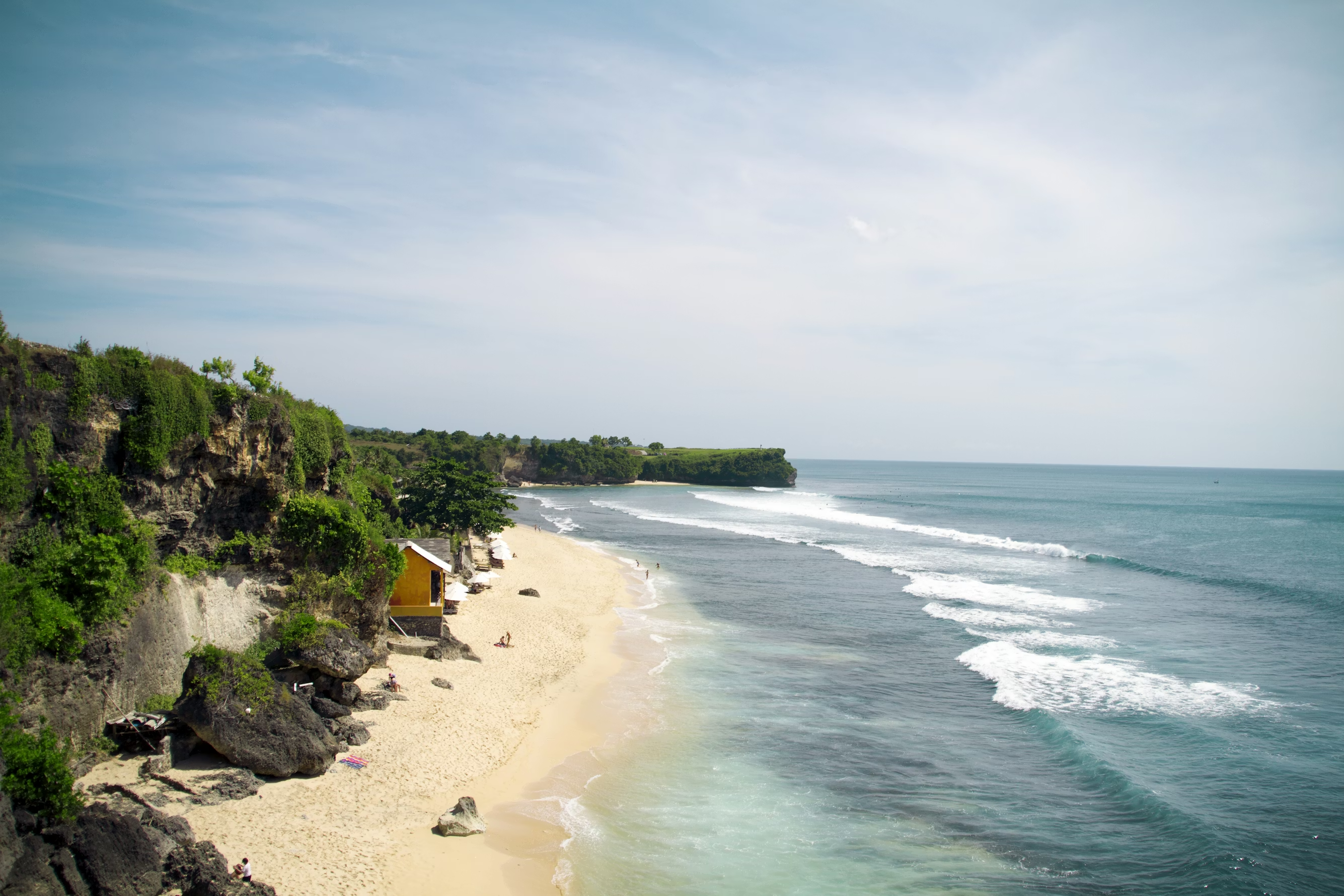
Picture this: cloudless blue skies, humidity that doesn't feel like you're breathing soup, and sunsets that genuinely make you stop mid-conversation just to stare. That's dry season Bali. The roads are actually drivable, hiking trails won't swallow your flip-flops in mud, and beach conditions are at their absolute best. I get why everyone wants to come during these months.
July & August: When Everyone Shows Up at Once
European summer holidays collide with Australian winter escape, and suddenly Bali feels like the entire Southern Hemisphere decided to vacation in the same place. I've watched the Canggu-to-Seminyak drive stretch from 20 minutes to nearly two hours. Every beach, every restaurant, every Instagram viewpoint is packed.
Hotel prices? They basically double. That cute villa you saw for $80/night in April? Try $200+ in August. The upside — and there genuinely is one — is that everything is operating at full capacity. Tours run daily, restaurants stay open late, and the energy is electric. If you thrive on buzz and don't mind crowds, this could be your scene. Just book everything (flights, accommodation, activities) at least three months ahead. I'm serious. Don't wait.
The Sweet Spot: April–June & September–October
If I could choose my ideal Bali window, this would be it. April through June and September through October hit this magical middle ground where the weather is still gorgeous, but you can actually breathe. The landscape in April and May? Unreal. The wet season rains have turned everything impossibly green — I'm talking rice terraces that look almost neon against the blue sky.
September and October are my personal favorites. The water is warmer, the diving visibility peaks, and there's this calm, settled energy after the July/August madness subsides. Prices drop back to reasonable levels, you can get a table at that trendy restaurant without a reservation, and the locals seem more relaxed too. If your schedule allows it, these months are Bali at its most balanced.
Wet Season (November–March): The Bali Most People Miss
Let me clear something up: wet season in Bali is not a monsoon. It's not nonstop rain for three months straight. It's more like... dramatic afternoon showers that roll in, dump everything they've got for an hour or two, then vanish like they were never there. You'll still get plenty of sunny days. But when it rains? It doesn't mess around.
I spent my first wet season terrified I'd be trapped indoors for months. Instead, I discovered something surprising: wet season Bali has a completely different personality, and honestly? I kind of love it. The rice terraces are at their most vibrant, waterfalls become absolutely thunderous (seriously, Tegenungan in wet season is a completely different beast), and there's something deeply peaceful about watching tropical rain roll over the jungle from a cozy cafe.
December & January: Holiday Chaos in the Tropics
Christmas and New Year create this weird phenomenon where peak-season crowds somehow show up during the wet season. Prices match July/August levels, restaurants are booked solid, and the weather is genuinely unpredictable. I've had Christmas weeks where it was sunny every single day, and others where daily downpours were the norm.
If you're coming for the holidays, my advice is simple: book absurdly early, pack a quality rain jacket, and embrace the unpredictability. Some of my favorite Bali memories happened during unexpected tropical storms — huddling under a warung roof with strangers who became friends, watching lightning illuminate the ocean, experiencing the island's wilder side.
February: The Secret Month
February is Bali's wettest, least visited month. Some smaller businesses close for renovations. But here's what nobody tells you: this is when you'll find the best deals, the emptiest beaches, and the most authentic interactions with locals who aren't completely burned out from tourist season.
The waterfalls are absolutely spectacular in February — Sekumpul and Nungnung at full power are genuinely breathtaking. Yes, you'll get rained on. Yes, some roads will flood temporarily. But pack a good rain jacket, keep your plans flexible, and you'll experience a side of Bali that most travelers never see. I once had entire sections of Tegallalang rice terraces completely to myself in February. Try doing that in August.
What About Your Specific Interests?
Surfing: Dry season (June–August) sends consistent swell to the west coast — Uluwatu, Padang Padang, Bingin are all firing. Wet season shifts the action east to Keramas and Nusa Dua. I've surfed both seasons, and honestly? Some of my best sessions happened during wet season east coast dawn patrols with barely anyone else in the water.
Diving & Snorkeling: Visibility peaks during dry season, with September–November offering glass-calm seas that feel like floating in an aquarium. But if you're hunting Mola Mola (those alien-looking ocean sunfish), July–October around Nusa Penida is your window. I saw three on a single dive last September, and I'm still not over it.
Hiking: Mount Batur sunrise treks are genuinely dangerous in wet season — the trails turn to mudslides and summit views are often completely obscured by clouds. Dry season only for this one, trust me. I made the mistake once in December and spent two hours climbing through rain only to see... fog. Beautiful, cold, disappointing fog.
Cultural Events: Galungan and Kuningan happen roughly every 210 days (Balinese calendar is different), and they transform the entire island. Streets lined with decorative bamboo poles called penjor, temples overflowing with offerings, families in their finest traditional dress — it's Bali at its most spiritually vibrant. Check the dates before you book. Nyepi (Day of Silence, usually March) is another profound experience, but the entire island literally shuts down for 24 hours. No flights, no lights, no leaving your hotel. Plan accordingly.
The Honest Verdict: When Should YOU Go?
Best overall experience: May or September. Perfect weather, manageable crowds, reasonable prices, and that sweet spot where everything is open but nothing is overwhelmed.
Best for tight budgets: February or November. You'll save 40-60% on accommodation, have restaurants and beaches practically to yourself, and honestly? The occasional rain just adds atmosphere.
Best for families with kids: June or July. Everything's guaranteed open, weather is reliably great, and kids can enjoy all the water activities without you worrying about afternoon storms.
Best for serious surfers: July–August for west coast perfection, or December–February if you're chasing empty east coast breaks.
Best for divers: September–November for the clearest water, July–October if Mola Mola are on your bucket list.
Here's what I've genuinely learned after multiple seasons in Bali: there's no "bad" time to visit. The island has this incredible way of giving you exactly what you need, even if it's not what you expected. Some of my most cherished memories happened during wet season storms — sharing shelter with strangers, watching rice paddies turn into mirrors during sudden downpours, experiencing the island's quieter, more introspective side. Choose based on your priorities, pack appropriately, and then let Bali do what Bali does best: surprise you.